Status
Project duration
2016
Minority Culture – A Foreign Element or Part of Polish Culture?
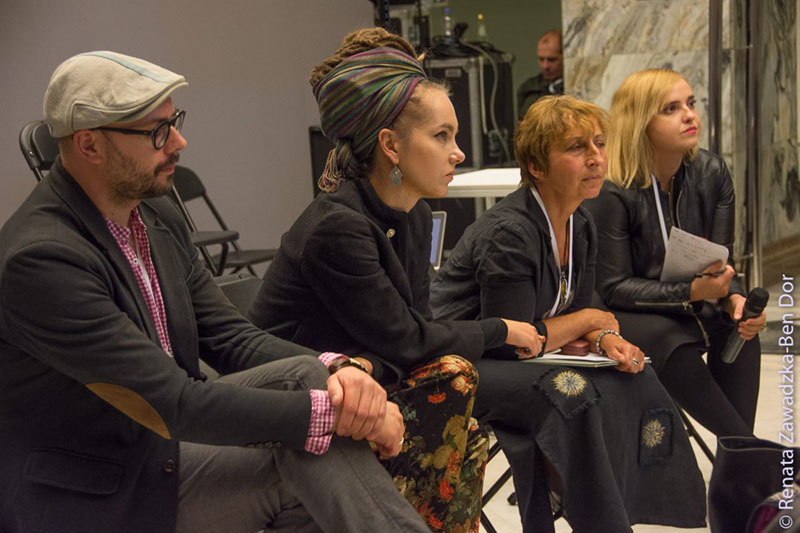
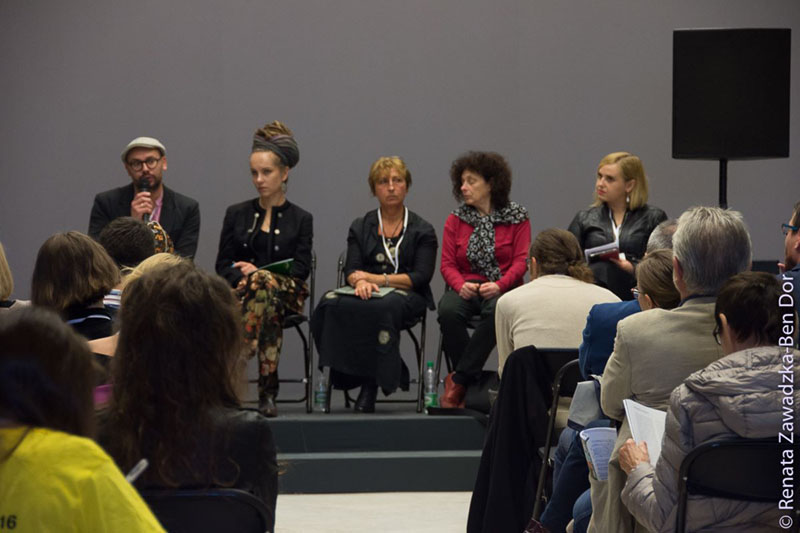
The project “Minority Culture – A Foreign Element or Part of Polish Culture?” is an expert, debate-oriented initiative carried out by the Jewish Association Czulent as part of the Congress of Culture (Warsaw, 7–9 October 2016). Its aim was to initiate an in-depth public debate on the role of minority cultures in Poland and to counteract stereotyping and exclusion by building a reliable and inclusive narrative about the country’s cultural heritage.
The project responds to important social challenges related to prejudice, simplified perceptions of “otherness,” and the marginalization of the experiences of national and ethnic minorities. By moderating a debate involving representatives of the Roma and Lemko communities, the association created a space for critical reflection on who tells the story of culture in Poland—and how both its past and present are represented.
This initiative strengthens the organization’s position as an expert in the fields of intercultural dialogue, anti-discrimination education, and research on cultural memory.
The starting point for the discussion was the thesis that Polish culture is neither homogeneous nor created by a single national group. The country’s heritage has been co-shaped by representatives of various communities, as illustrated by the achievements of figures such as Nicolaus Copernicus, Ludwik Hirszfeld, Karol Pollak, and Pola Negri.
At the same time, the growing contemporary interest in minority cultures—reflected in the increasing number of festivals, educational projects, and social initiatives—reveals tensions related to how these cultures are represented and interpreted by the majority group.
During the debate, a critical analysis was undertaken of the phenomenon of “speaking on behalf of others,” highlighting the risks of appropriating narratives and oversimplifying the experiences of minorities. It was noted that dominant narratives often exoticize minority cultures, presenting them as “foreign” and detached from the mainstream of Polish history, rather than recognizing them as an integral part of shared heritage.
The discussion also addressed the functioning of exclusionary language in the public sphere, where terms referring to minorities (e.g., “Jew,” “Gypsy”) are sometimes used as carriers of negative meanings and social stigmatization.
The debate also referred to contemporary political and media contexts, analyzing how terms such as “multikulti” or “multiculturalism” are used in public discourse. In this context, key questions were raised about the maturity of society to recognize diversity as a foundation of shared identity, as well as about the place of minorities in official historical and educational narratives.
The project is part of the association’s long-term efforts to strengthen intercultural dialogue, counter discrimination, and build a conscious, open society. It serves as an example of effectively combining academic reflection, social experience, and educational practice in order to develop a more inclusive approach to memory and cultural policy.
Project materials and results