Status
Project duration
2021
Nationality, Ethnicity, and Coalition Building: A Mechanism for Cooperation Between Minority Groups in Poland
Here’s a slightly refined, more polished version for consistency and flow:
The project focused on transitioning from dispersed local contacts and informal networks of cooperation toward building sustainable coalitions of minority organizations. Its activities were aimed at strengthening the participation of minority organizations in local decision-making processes, enabling them to more effectively identify, articulate, and represent their needs and concerns, as well as to counteract discrimination.
It was designed as a bottom-up process, resulting in the development of recommendations at the national level. The project focused on strengthening cooperation among national and ethnic minority organizations, as well as on building their relationships with public administration. A key element was enhancing the competencies, knowledge, and skills of representatives of these communities, along with creating effective channels of communication with public authorities. The project contributed to building networks of cooperation and increasing the participation of minority organizations in decision-making processes.
As part of the project, the Jewish Association Czulent carried out the following activities:
- Local trainings – aimed at increasing knowledge, developing competencies, and strengthening cooperation between minority organizations and public administration. The workshops fostered the initiation of collaboration between organizations, increased minority participation in decision-making processes, and facilitated the exchange of good practices. Particular emphasis was placed on building networks, developing partnerships, and forming coalitions as key elements for enhancing the effectiveness of actions supporting national and ethnic minorities.
Training participants:- expanded their knowledge of fundraising;
- gained up-to-date information on available funding opportunities (both financial and non-financial resources, calls for proposals, and grants);
- learned effective channels of communication with public administration and decision-makers;
- developed communication competencies, including the ability to effectively formulate proposals and engage in dialogue with public officials and policymakers.
- The “Catalogue of Minority Experts” – a digital publication (PDF) prepared in two language versions (Polish and English), presenting experts from national and ethnic minorities. The aim of the catalogue was to promote their expertise and facilitate public administration’s access to specialized knowledge in the area of cooperation with minority communities. The publication received the patronage of the Commissioner for Human Rights, which underscored its importance and credibility.
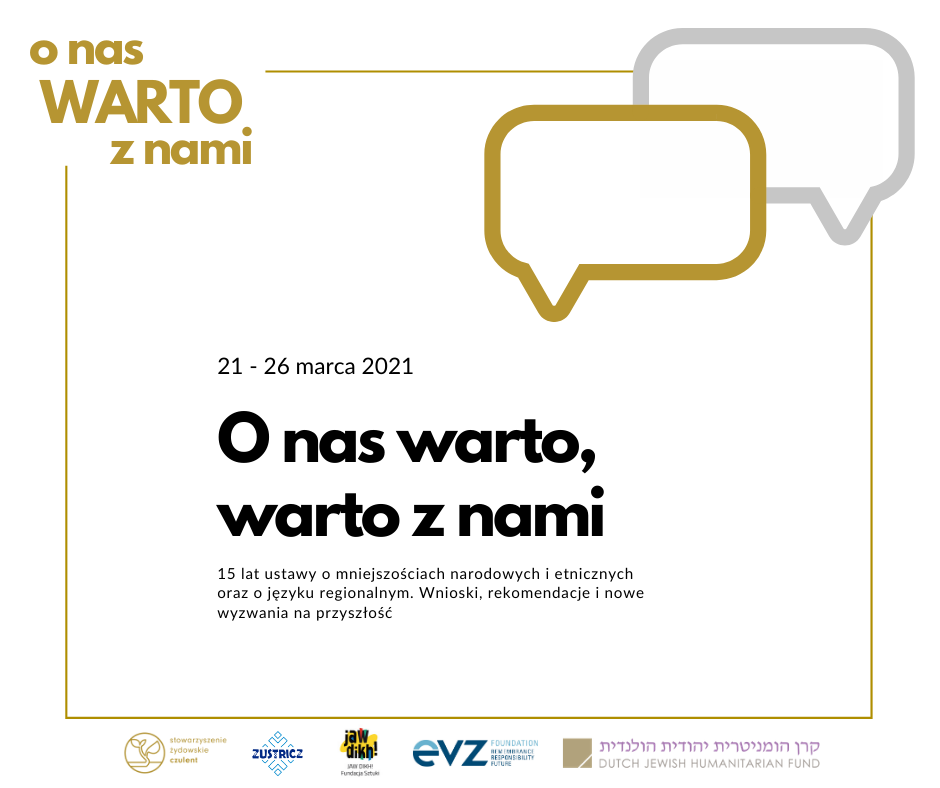
- A nationwide conference – serving as a platform for debate and the exchange of experiences. As part of the event, key issues were discussed, including:
- the situation of national and ethnic minorities in the context of international law and protection mechanisms;
- the promotion of the publication “It’s worth about us, worth with us”” – a catalogue of minority experts supporting increased minority participation in decision-making processes;
- good practices for the participation of minorities in the development of legal solutions;
- the importance of networking, building alliances, and forming coalitions as the foundation of effective action
- the issue of hate speech against national and ethnic minorities
The implementation of the project contributed to strengthening the position of minority organizations, enhancing their capacities, and building sustainable mechanisms of cooperation with public administration. The project confirmed the role of the Jewish Association Czulent as a leader in promoting integration, participation, and counteracting discrimination.
Project materials and results
Project support and cooperation
Partners:
- Zustricz Foundation
- Jaw Dikh Foundation
The project was funded by the following sources:
- Stiftung „Erinnerung, Verantwortung und Zukunft” (EVZ)