Subject
available languages
Date of publication
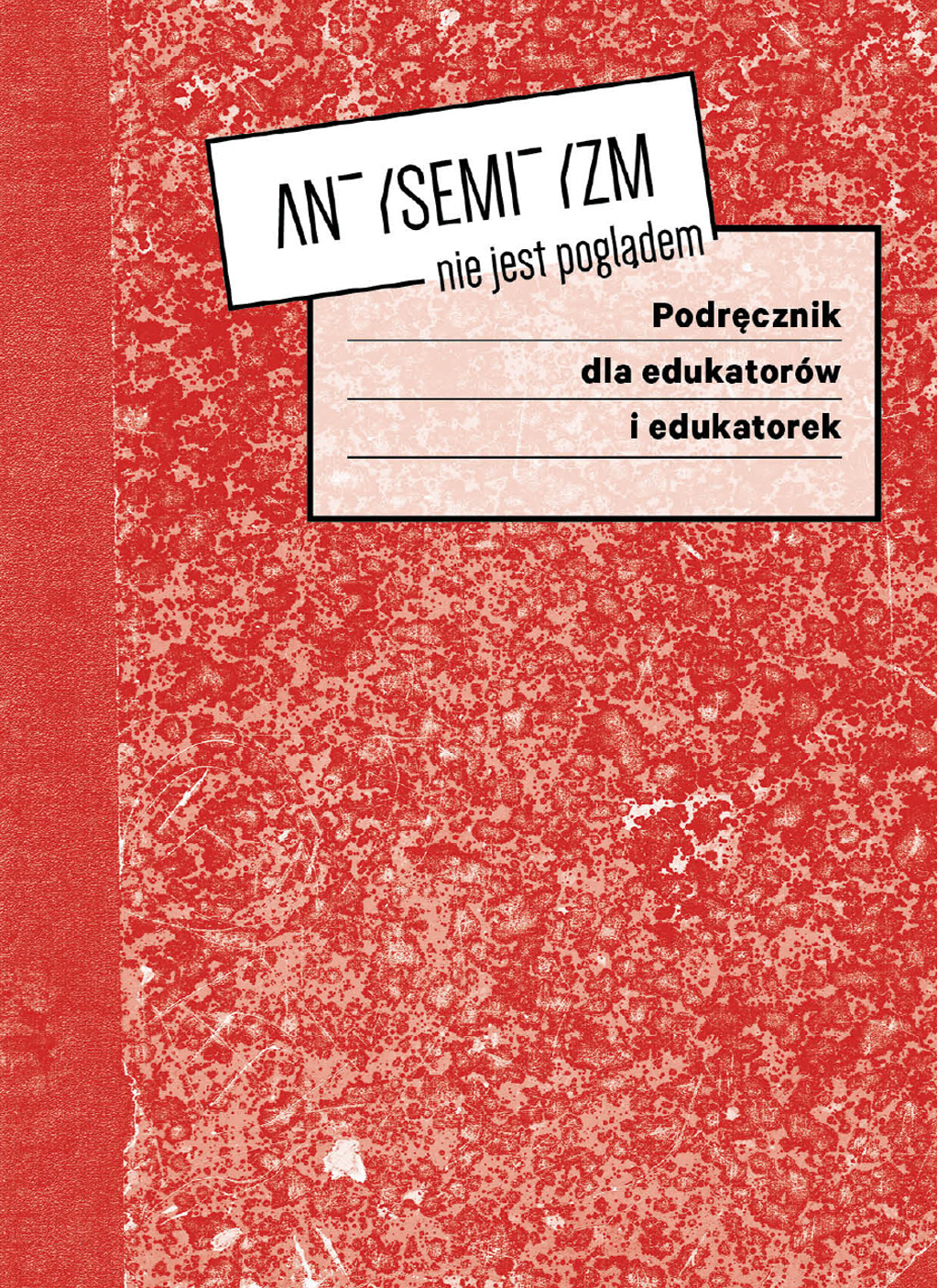
Antisemitism is not an opinion. Manual for Educators
This publication is a comprehensive handbook that combines an analysis of educational content with practical teaching tools. It shows how the Jewish community is portrayed in school textbooks and which narratives dominate, and then – in response to the identified challenges – offers ready-to-use lesson scenarios developed by experts, including educators, historians, and psychologists. The publication is intended for university lecturers working with students, teachers, educators, and those involved in non-formal education, serving as a comprehensive resource for addressing complex social issues.
Comprehensive analysis of school textbooks
The first part is an in-depth analysis of school textbooks, aimed at examining whether and how Jewish topics are included, which themes dominate, and whether Jews are presented as part of society or as “others.” The analysis is based on the study of specific excerpts and motifs, allowing for a broader understanding of educational narratives. The findings show, among other things, a dominance of collective over individual representations, as well as a strong focus on themes such as the Holocaust, stereotypes, and the portrayal of Jews primarily as victims. This section identifies key challenges and gaps in education.
Lessons plans
The second part of the publication responds directly to the identified challenges. It includes lesson scenarios developed by a team of experts – educators, historians, and psychologists – which are firmly grounded in the findings of the analysis. These scenarios aim, among other things, to shift attitudes, foster critical reflection, and deepen knowledge of both the history and contemporary life of the Jewish community. They have been designed as tools for:
- for university lecturers working with students,
- for use in formal education,
- but also effective in non-formal, workshop-based, and community education.
Their key feature is that they are tailored to the specific challenges identified in the analysis.
Publikacja ma charakter kompleksowy – łączy diagnozę z praktyką, analizę z działaniem. Nie ogranicza się do opisu problemu, ale proponuje konkretne rozwiązania dydaktyczne, zakorzenione w badaniach i doświadczeniu ekspertów.
This approach – from analysis, through identifying challenges, to developing educational tools – is characteristic of the work of the Czulent Association, which combines research, expert knowledge, and educational practice to create solutions that respond to real social and educational needs.
Table of contents
- Introduction
- The phenomenon of anti-Semitism in Poland based on research.
- Analysis of school textbooks and lesson plans.
- Culture and society in school textbooks for humanities subjects.
- Cultural analysis of the content of school textbooks related to topics about Jews (and related subjects).
- Praise for critical thinking.
- “We cultivate Polishness.” Anti-Semitism in the public sphere.
- Hate speech. Perpetrators. Victims. Witnesses.
- Hate speech. Legal aspects
- Lessons plans
- Difficult herritage – an important challenge. A workshop scenario in the area of anti-antisemitism education for teachers and educators
- From opinion to insight. A cognitive workshop of open thinking.
- Antisemitism in public space
- Antisemitism is Not an Opinion.
- Hatecatcher
- Biographies of authors.
- Information about the project
- Information about Jewish Association Czulent
Cooperation and support
The publication was created as part of the project “Anti-Semitism is not an opinion,” implemented under the Citizens for Democracy program, funded by the EEA Grants, as well as by The Kronhill Pletka Foundation, the International Council of Jewish Women, the Network of East-West Women, and with the support of grants from Kenneth Slater, Allen Haberberg, Shalom Levy, and Michael Traison.
The project was granted Honorary Patronage by the Commissioner for Human Rights and the Government Plenipotentiary for Equal Treatment.