Subject
available languages
Date of publication
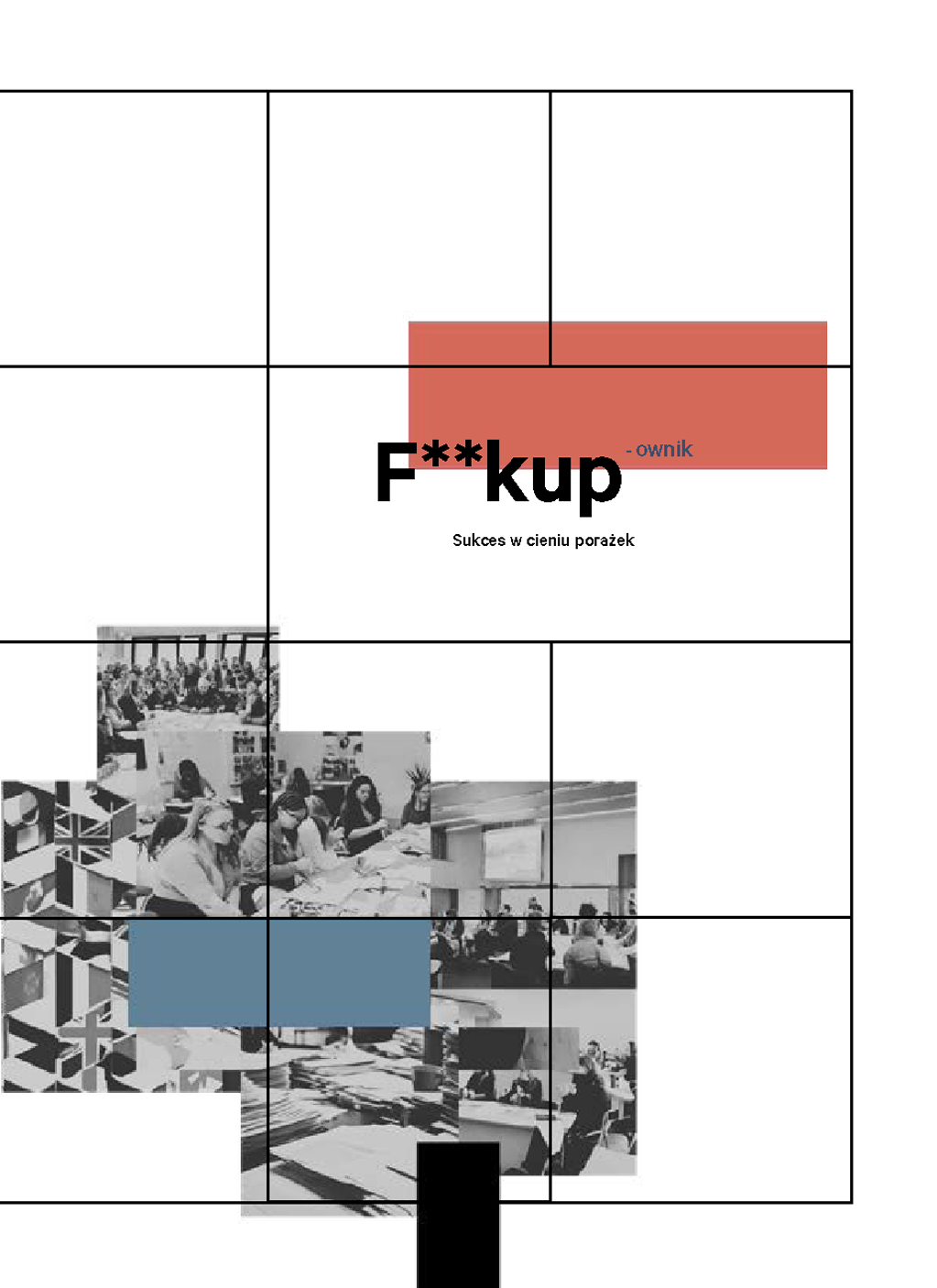
F**k Upper. Success in the shadow of failures
This publication was developed as part of the project “Strategies for cooperation and inclusion of people at risk of Discrimination and Exclusion” and serves as a practical guide to the challenges related to cooperation between local governments and minority communities, including migrants and refugees.
The starting point for its development was the observation that, despite the goodwill and commitment of many stakeholders, efforts aimed at social inclusion often encounter difficulties that are sometimes misinterpreted as a lack of willingness to cooperate.
The starting point for its development was the observation that, despite the goodwill and commitment of many stakeholders, efforts aimed at social inclusion often encounter difficulties that are sometimes misinterpreted as a lack of willingness to cooperate. The publication shows that the source of these problems is most often complex barriers—cultural, communication-related, and systemic—that remain invisible or not fully understood by participants in the process.
The guide stands out for its approach based on the analysis of real failures. It was inspired by the “Fuckup Nights” format, which focuses on learning from mistakes. The authors draw on specific cases drawn from the experiences of representatives of minority communities, local government employees, and events organized by the Association.
Based on these stories, the publication identifies key factors leading to failures in cooperation and proposes possible remedial strategies and alternative approaches. As a result, it serves not only as a diagnosis of problems, but above all as a tool supporting the development of more effective, informed, and partnership-based relationships between public institutions and diverse communities.
The publication is addressed to people working in public administration, civil society organizations, as well as anyone who wants to better understand the mechanisms of exclusion and act more effectively in support of social inclusion.It demonstrates how to use new technologies—from simple methods of recording content to advanced monitoring tools and web crawlers—to genuinely increase the chances of holding perpetrators accountable. It is a practical guide based on the experience of the Jewish Czulent Association and the expertise of specialists, including experienced prosecutors.
Table of contents
- Introduction
“I stopped working with minorities. They don’t attend events. They always resist cooperation with officials.”- “It doesn’t make sense. They are only interested in their own personal interests, not in the well-being of the minority.”
- “I avoid working with local government. It’s a bureaucratic and communication nightmare.”
- “It’s not worth engaging in cooperation with (…). This group is much less educated and socially engaged than others.”
- “It’s all just for show. Local government initiatives never address the real needs of minorities.”
- “I don’t understand why this cooperation is being questioned by young people. We work with good, well-assimilated minorities who have lived in our city for forty years.”
- “From my 20 years of experience working in the office, I can say that migrants show no interest in local government.”
- “Cooperation with local government is a one-way street; citizens have no real influence.”
- Consultations among municipal office staff
- “This meeting was a waste of time. Migrants’ expectations are unrealistic and beyond the city’s competences.”
- “We cooperate with everyone! Minority organizations will not have any special privileges!”
- “I will no longer cooperate with them. Minority organizations are demanding.”
- “I felt excluded. It was an event for the Jewish community. Not only was it organized during our holiday, but we were served pork. There weren’t even any vegetarian options. That shows how we are treated.”
- Support in understanding the local context
- “We did not organize the event due to a lack of funds for translation.”
- “It was a nightmare. We will not cooperate with them. Shouting. Threats. It’s one big conflict. We hired experts to speak about this group.”
- “What a failure. I was disappointed with this collaboration. I thought that if a group experiences discrimination, it would be more open. It turned out to be a very conservative group, and that man didn’t want to shake my hand because I am a woman.”
Cooperation and support
The report was developed as part of the project “Strategies for cooperation and inclusion of people at risk of discrimination and exclusion” implemented with a grant from the Active Citizens – National Fund programme, funded by Iceland, Liechtenstein, and Norway through the EEA Grants.
The project is implemented by the Czulent Jewish Association in cooperation with the Municipality of Krakow, the Lesserpoland Voivodeship Police Headquarters and the American Jewish Committee Central Europe.